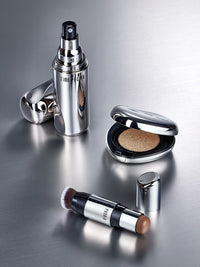


To apply cushion foundation smoothly, press a clean puff lightly into the cushion, tap a thin layer onto one area of your face, and use the remaining product to soften the edges. Check that first layer before picking up more. Build coverage only over redness or marks that still show, rather than coating your whole face again. Around the nose, mouth, and jawline, a lightly loaded puff gives you more control than a saturated one. Full coverage comes from the formula and careful placement; adding more everywhere can make texture more visible. Prepare your skin first and choose a shade that blends with your neck.
Start With the Right Formula and Shade
The same puff technique can give different results with different cushions. A sheer formula may not provide the coverage you want even after several layers, while a higher-coverage formula can deposit plenty of pigment with one light press. If you are new to the format, our beginner's guide to cushion foundation explains how coverage, finish, and wear differ.
Timeless Lumina Matte Cover Cushion Foundation is TimePhoria's full-coverage cushion with a natural soft-matte finish, positioned especially for oily and combination skin. For this type of formula, begin with less product and assess what it already covers before building further.
Check your shade along the jaw and against your neck in natural light after it settles. Applying a thicker layer will not correct a shade that is too light, dark, pink, or golden. If you are deciding between a diffused or more luminous look, compare the options in our matte versus dewy cushion guide.
What You Need
- Your cushion foundation and a clean, dry puff.
- Your usual skin preparation and daytime sun protection.
- A mirror in good light, preferably near a window.
- Optional: a small concealer brush and a little setting powder for areas that need them.
Use a puff that is comfortable to press against your skin. Keep your hands clean, avoid sharing the compact, and close it after application. The FDA's cosmetic safety guidance supports these habits and advises following the product's directions. Follow your puff's care instructions, and let a washable puff dry completely before storing or using it again.
Step 1: Let Your Skin Preparation Settle
Start with a clean face and use moisturizer according to your skin's needs. Give extra attention to areas that feel dry, such as the cheeks or around the mouth. Apply your daytime sunscreen before foundation and follow its directions. The American Academy of Dermatology's recommended skin-care order places moisturizer and/or sunscreen before makeup.
Begin foundation when your preparation has settled rather than while the surface is still wet or slippery. There is no single waiting time that suits every routine. If products roll into little crumbs as you tap, pause; more foundation can make that pilling harder to smooth. Gently remove loose crumbs and simplify the layers underneath next time.
Primer is optional. If you already use one that works with your base, apply it as directed. A new primer, moisturizer, and cushion introduced together can make it harder to tell which step caused an uneven result.
Step 2: Load the Puff With a Light Press
Slip your fingers under the puff's strap and press the application surface lightly into the cushion. Begin with one gentle press rather than repeatedly pushing down until the puff is coated. Cushion fullness and formula density vary, so judge the amount you have picked up rather than following a fixed number of presses.
The puff should carry a light amount of product, not a thick wet coating. Place that initial load where you want more tone-evening, such as the inner cheek, and spread it across that area with taps before reloading. For Lumina's full-coverage positioning, this is a useful way to find out how much one small pickup can do.
Step 3: Tap One Area, Then Move Outward
Work across one cheek first. Use gentle, overlapping presses, lifting the puff between each contact. Carry the remaining product toward the outer cheek. Then repeat on the other side and work across the forehead and chin in small sections.
Tapping gives you control over where pigment lands. Long wiping motions can move product away from the area you wanted to cover and leave more at the end of the stroke. You do not need to hit the skin hard or keep tapping the same spot after it looks even.
Reload only when the puff stops depositing enough for the next area. Keep the layer lighter near the perimeter of the face; you can refine those edges after the center looks balanced.
Step 4: Refine the Nose, Mouth, and Under-Eye Area
These smaller, moving areas are easy to overload. Use the puff's remaining product first.
- Sides of the nose: Use a narrow edge of the puff if its shape allows. Press gently into the visible skin beside the nostril, then lift. Avoid packing a fresh, heavy load into the fold.
- Around the mouth: Relax your face and tap a light layer. Check the creases beside the mouth before adding more.
- Under the eyes: Apply only what you need and use very light pressure. If the puff's edge feels uncomfortable, choose a softer tool rather than pressing harder.
If a small mark or under-eye shadow still needs coverage, consider targeted concealer instead of another broad layer of foundation. Timeless Valora Fit Perfection Concealer is a high-coverage option within the TimePhoria range. Place a tiny amount where needed and soften its perimeter so the surrounding cushion base stays light.
Step 5: Build Coverage Only Where It Is Missing
Pause and look at your face as a whole. If one cheek already looks even, leave it alone. Pick up a small amount for the remaining redness or mark and press it directly onto that area. Gently blend the boundary, keeping the extra pigment concentrated where you want coverage.
Stop when the added layer begins to look obvious, collects in a fold, or moves the layer beneath it. More product will not necessarily improve those areas. You may get a smoother appearance by reducing the amount or using a small concealer placement.
Full coverage means more visual tone-evening, not the disappearance of pores, fine lines, or every raised bump. Check from a normal viewing distance as well as up close; a base that looks balanced in everyday light does not need repeated layers to chase a perfectly textureless finish.
Step 6: Soften the Jawline and Hairline
Use the lightly loaded puff to blend the foundation toward your hairline, the sides of your face, and your jaw. Look for a visible band where application stops. Blend the boundary without carrying a thick layer into your hair or coating your neck to compensate for a shade mismatch.
Turn your head slightly in the mirror and check both sides. The area below the cheek and near the ear can be easy to miss when you only look straight ahead. If the face and neck look noticeably different in color after blending, reassess the shade before adding more coverage.
Step 7: Set Selectively and Finish
Let the foundation settle and decide whether any areas need setting. If your T-zone tends to become shiny or your base feels tacky there, try a light amount of setting powder only in those places. Use a gentle pressing motion rather than repeatedly sweeping over the foundation.
A soft-matte cushion does not automatically need powder everywhere. Leave comfortable, even-looking areas alone, especially where extra powder makes dryness more visible. For your first Lumina application, observe the base before adding several finishing products so you can judge the cushion's own appearance and feel.
Frequently Asked Questions
Should I use a wet or dry cushion puff?
Start with a clean, dry puff unless the product's instructions say otherwise. Do not assume a cushion puff needs the same dampening method as a separate blending sponge. Keep added water out of the compact.
How much cushion foundation should I use?
Start with one light press and assess the amount on the puff. A fresh cushion or high-coverage formula may deposit more than expected. Reload when needed and build a second layer only on specific areas.
Do I apply concealer before or after cushion foundation?
For this tutorial, apply the thin cushion layer first, then conceal what still shows. This helps you avoid covering the same area heavily with both products. If you already have a routine that works, adjust the order to your formula and preference.
Why does my cushion look streaky or patchy immediately?
Check whether you dragged the puff, applied onto slippery preparation, or kept moving a layer that was already settling. Use gentle taps and work in small sections. If adding more starts lifting the base, pause and reassess instead of continuing to layer.
Do I need two layers for full coverage?
No. Some areas may already have enough coverage after the first thin layer, particularly with a formula positioned as full coverage. Judge the result area by area; a targeted second layer is often easier to control than repeating the entire face.
Keep the Coverage Where You Need It
A light puff load, small tapping sections, and a careful edge check make cushion application easier to control. With Lumina, begin thin, see what that layer covers, and build locally. Once the base looks even and feels comfortable, finish there rather than continuing to add product.